
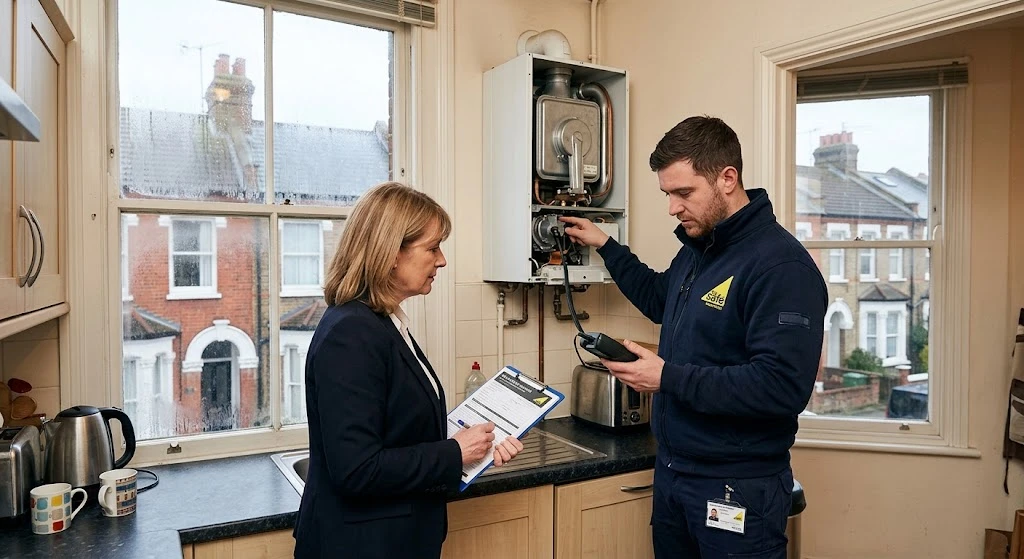
Rental-property upkeep gets plenty of attention when it comes to paint, flooring, and kerb appeal — far less when it comes to the gas and heating system a tenant depends on every day. That gap is where West London landlords quietly rack up the most expensive, most avoidable costs in property management. Getting it right starts with using a properly qualified gas engineer west London landlords can rely on for certification, not just repairs.
The Problem: Gas Safety Gets Treated as Paperwork, Not Maintenance
Most landlords know they need a Gas Safety Certificate (CP12) renewed every 12 months — it is one of the few legal obligations that is genuinely unavoidable. But knowing the certificate exists and treating gas safety as an ongoing maintenance responsibility are two different things. Too often, the annual check becomes a box-ticking exercise: book the cheapest available engineer, get the pass, file the paperwork, move on until next year.
That approach misses the point of the check. A rushed, minimum-effort inspection can technically satisfy the legal requirement while leaving a boiler that is inefficient, a heating system that is unevenly balanced, or an appliance that is one winter away from a breakdown — all things a thorough inspection would flag, and a cut-rate one won’t.
Where It Actually Costs Landlords Money
The financial damage from treating gas safety as paperwork shows up in a few predictable ways:
- Emergency callouts replace planned maintenance. A boiler that fails mid-winter, with a tenant without heating or hot water, costs far more to fix urgently than the same fault caught and addressed during a thorough annual check.
- Void periods get longer. Tenants who’ve had a cold, heating-related winter are far less likely to renew — and a property that can’t demonstrate a well-maintained heating system is a harder sell to new ones.
- Repairs compound. A heating system that’s never properly serviced accumulates small faults — a failing pump, scale build-up, an inefficient burner — that are individually cheap to fix early and expensive once they cascade into a full breakdown.
- Insurance and compliance gaps surface at the worst time. A certificate that’s technically valid but backed by a superficial inspection won’t protect a landlord if an incident investigation finds the underlying fault should have been caught.
What’s Legally at Stake
The Gas Safety Certificate (CP12) is a legal requirement, not a formality. Under the Gas Safety (Installation and Use) Regulations 1998, landlords must have every gas appliance and flue checked annually by a Gas Safe registered engineer, and must provide tenants with a copy of the certificate. Letting it lapse, or relying on an engineer who isn’t properly registered, exposes a landlord to fines, invalidated insurance, and — in the event of a gas-related incident — potential criminal liability.
Only Gas Safe registered engineers can legally carry out this work. It’s worth checking an engineer’s registration directly rather than taking a certificate at face value — unregistered or under-qualified work on a gas appliance is one of the most common ways landlords unknowingly end up non-compliant.
Boiler efficiency affects EPC ratings, which increasingly factor into what a property can legally be let for. A heating system that’s merely “passing” rather than well-maintained quietly erodes a property’s compliance margin over time.
The Fix: Treat the Annual Check as Maintenance, Not a Formality
None of this requires a different legal process — it requires a different standard for who does the work and how thoroughly:
- Use a Gas Safe registered engineer who actually inspects the system, not just the appliances required for the certificate.
- Ask for a brief written note on the condition of the boiler and heating system alongside the certificate, not just the pass/fail result.
- Book the check a few weeks before the deadline, not on it — leaving time to address anything flagged before it becomes urgent.
- Keep a maintenance record across tenancies, so patterns (a boiler that needs servicing more often than expected, for instance) get caught rather than repeated.
For landlords managing rental properties across West London, this is exactly the gap Olia’s Plumbing & Heating is built to close. As a Gas Safe registered team, they carry out proper gas safety inspections and CP12 certification alongside genuine boiler servicing — not a rushed pass-and-file visit — so landlords get both legal compliance and an honest picture of their heating system’s condition.
If a gas safety certificate is coming up for renewal, or a rental property’s heating hasn’t been properly serviced in a while, that’s worth sorting before the next tenancy turnover — not after a tenant reports no heating in January.
The Bottom Line
Gas safety compliance and genuine heating maintenance are not the same thing, even though one certificate is meant to cover both. Landlords who treat the annual check as real maintenance — not paperwork — avoid the emergency callouts, void periods, and compounding repair costs that come from a system that technically passed but was never actually looked after.
For any West London landlord whose gas safety check is due, or whose heating system hasn’t had a proper service in a while, that’s a conversation worth having with Olia’s Plumbing & Heating before it becomes an emergency.