
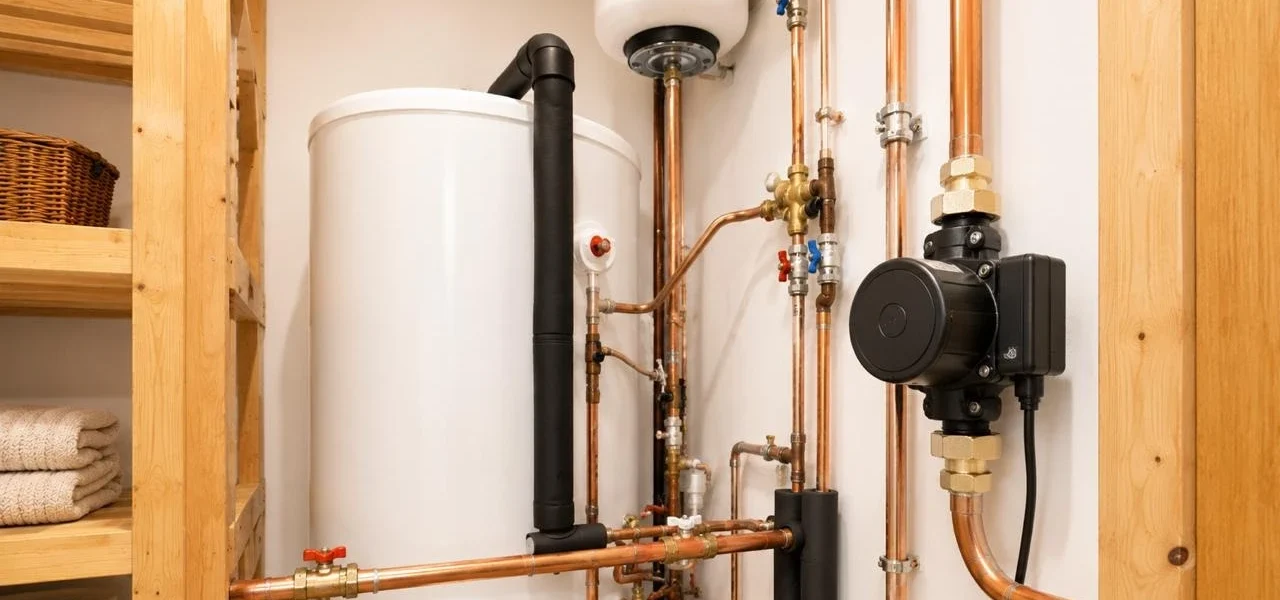
If your central heating pump has started making strange noises – banging, humming, gurgling or rattling – you’re not alone. A noisy circulation pump is a common issue in UK homes, highlighting the importance of regular checks to keep your system reliable. The good news: most causes are straightforward to diagnose, and many can be fixed without calling an engineer.
What Does a Healthy Heating Pump Sound Like?
A properly functioning circulator pump should be virtually silent or produce only a low, barely audible hum. Anything louder than that – or any new sound that wasn’t there before – is a sign something needs attention.
Common Causes of a Noisy Heating Pump
1. Air trapped in the system
The most frequent culprit. Trapped air creates gurgling or bubbling sounds as water tries to push past it. You may also notice cold patches at the top of radiators. Bleeding the radiators – and sometimes the pump itself – usually clears this quickly.
2. Limescale and sludge build-up
In hard water areas – which cover most of England, including London and the South East – limescale accumulates inside the pump over time. A grinding or rattling noise often indicates the impeller is struggling against deposits. A power flush or chemical descale can restore normal operation.
3. Incorrect speed setting
Many pumps are left on the highest speed setting when a lower one would be perfectly sufficient. Running at unnecessary speed creates turbulence and noise. If your pump has a manual speed dial, try reducing it one notch and give the system 24 hours to settle.
4. Worn bearings
A persistent whining or screeching sound – rather than gurgling or rattling – usually points to worn motor bearings. This is common in pumps that have been running for ten or more years. Once bearings fail, no amount of bleeding or flushing will fix them.
5. Cavitation
A sharp crackling or knocking noise that doesn’t clear after bleeding or flushing may point to cavitation – a pressure problem at the pump inlet. It’s uncommon in home systems, but if other fixes haven’t worked, mention it to a heating engineer.
How to Fix a Noisy Circulation Pump
Work through these steps before deciding anything needs replacing:
- Bleed the radiators. Start with the radiators furthest from the boiler and work back. If air keeps returning after a few days, there may be a small leak introducing fresh oxygen into the system.
- Reduce pump speed. Drop the manual setting by one speed and check whether the noise improves. Most small to medium UK homes heat perfectly well on speed 1 or 2.
- Powerflush the system. If sludge or limescale is the issue, a powerflush removes debris and restores proper flow. It’s worth doing if radiators are also heating unevenly.
- Add or top up inhibitor. A heating system inhibitor (such as Fernox F1 or Sentinel X100) prevents corrosion and sludge buildup. Add it after any flush and check the concentration annually.
- Check installation. Ensure the pump is mounted correctly – most circulators must be installed horizontally. Also, check that pipework connections are tight and that the pump isn’t touching any metalwork that could transmit vibration.
When Is It Time to Replace the Pump?
Some situations call for replacement rather than repair:
- The pump is more than 10 years old, and the noise is getting worse
- Bearings are worn (continuous whine or screech)
- Noise returns immediately after bleeding or powerflush
- The pump is fixed-speed, and you want quieter, more energy-efficient operation
Modern variable-speed circulation pumps are significantly quieter and more efficient than older models. They adapt to your system’s needs, reducing turbulence and noise, which can give homeowners confidence in upgrading for better performance and lower costs. When choosing a replacement, check the Energy Efficiency Index (EEI): a value of 0.23 or below indicates a current, efficient model.
Getting the Sizing Right
An oversized replacement pump will create the same noise problems you’re trying to fix. The key figures to match are:
- Flow rate – measured in m³/h, this should match your system’s heat output
- Head height – the resistance the pump must overcome through pipework and radiators
- Connection size – typically 1½” for domestic systems, 2″ for larger or commercial ones
Once you’ve got these figures, matching a pump is simple. BritTherm’s circulation pumps are designed for quiet, reliable operation in domestic heating systems. Choose the right size, and the result is a pump that runs quietly and dependably – no more humming or rattling.
A noisy heating pump is rarely an emergency, but if bleeding the system or adjusting the speed setting doesn’t reduce the noise, it may indicate a more serious issue. In such cases, consulting a heating engineer can prevent further damage and ensure proper diagnosis and repair.