
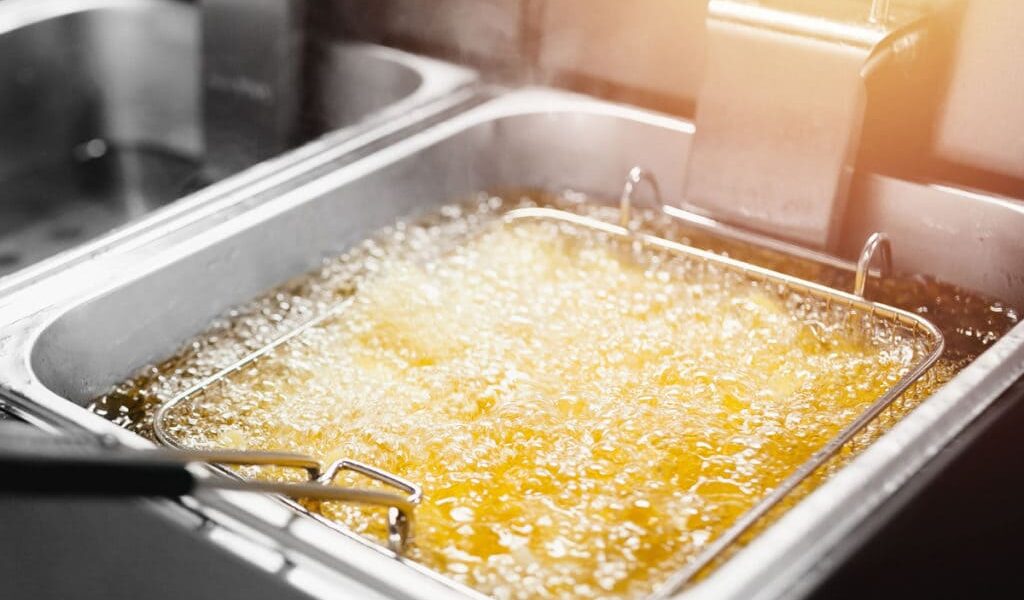
For any food business, used fryer oil is more than an operational by-product. It is a regulated waste stream that can create drainage blockages, pest problems, odours, pollution risks and compliance exposure if handled incorrectly. Whether you operate a restaurant in Dublin, a takeaway in Belfast, a hotel kitchen in Galway or a catering business serving events across the island, fryer oil disposal must be managed as part of your wider environmental and food-safety responsibilities.
Although the Republic of Ireland and Northern Ireland have different regulators and legal systems, the practical principle is the same: used cooking oil must not be poured into sinks, drains, toilets, gullies or surface water systems. It should be collected, stored securely and transferred only to an authorised or licensed waste contractor who can take it to an approved recovery or disposal facility.
Why fryer oil cannot go down the drain
Fresh cooking oil is a food ingredient; used cooking oil is waste. Once it has been used in fryers, griddles, roasting trays or food preparation, it usually contains food particles, carbonised residues and degraded fats. When this material enters pipework, it cools, thickens and sticks to the inside of drains and sewers. Over time, it combines with wipes, food debris and other solids, creating severe blockages.
For businesses, the consequences can be immediate and expensive: emergency drain clearance, kitchen downtime, unpleasant smells, customer complaints, environmental health attention and possible enforcement. For water networks, fats, oils and grease — commonly known as FOG — contribute to sewer blockages and pollution incidents. This is why regulators and water utilities treat commercial fryer oil disposal as a compliance issue, not just a housekeeping matter.
Rules in the Republic of Ireland
In Ireland, food businesses must manage commercial waste through authorised routes. Local authorities regulate commercial waste disposal, while waste collection providers must hold the appropriate authorisation. Businesses should use a permitted waste collector and, where relevant, ensure the receiving facility is also authorised to handle the material.
Uisce Éireann operates a national Fats, Oils and Grease reduction and licensing programme in partnership with local authorities. Food service establishments may be assessed for the risk their kitchen discharge poses to the wastewater network and may receive guidance on licensing requirements under Section 16 of the Local Government (Water Pollution) Act 1977, as amended. In practice, this means businesses should be able to show that they have proper systems in place to prevent FOG from entering the sewer.
For kitchens using fryers, best practice normally includes three layers of control. First, used oil should be drained into a dedicated, sealed container once it is cool enough to handle safely. Second, sinks and dishwashing areas should be protected with strainers, dry-wipe procedures and staff training to minimise grease entering wastewater. Third, grease management equipment, such as a grease trap or grease separator, should be installed and maintained where required by the premises, the drainage setup or licensing conditions.
A business arranging waste oil collection ireland services should verify that the collector is properly permitted for the relevant waste type and collection area. It is not enough to accept a verbal assurance. Keep the collector’s permit details, service agreement, collection dockets, invoices and waste transfer records in a compliance file. These records are useful during inspections and help demonstrate that the oil has not been disposed of illegally.
Rules in Northern Ireland
In Northern Ireland, the responsibility for enforcement of cooking oil waste disposal is split between district council environmental health departments and the Northern Ireland Environment Agency. Food businesses that produce waste cooking oil must store it properly, prevent spills and arrange collection by an authorised collector. Used oil must be taken to an authorised site for recovery or disposal.
Northern Ireland Water also advises businesses to arrange oil collection by a licensed waste contractor, install grease traps where appropriate and maintain grease management systems. Businesses are warned that legal requirements exist to prevent fats, oils and grease from entering drains and sewers, and failure to comply can lead to enforcement or prosecution.
Northern Ireland also applies a duty of care framework for controlled waste. This means waste producers, carriers and managers must take reasonable steps to ensure waste is handled safely and legally. Waste movements should be documented with transfer notes, and businesses should check that any carrier, broker or dealer they use is registered or otherwise authorised. For companies comparing Waste Oil Collection Northern Ireland providers, the key questions are simple: Are they registered? Can they provide documentation? Where will the oil go? Can they collect at the frequency your kitchen actually needs?
One important food-safety point is that waste cooking oil from catering premises must not be used as animal feed, as an ingredient in animal feed or as part of feed operations. A licensed recovery route, such as processing into biodiesel or another authorised treatment route, is the appropriate destination.
Storage requirements and operational best practice
Good compliance starts inside the kitchen. Used oil should be allowed to cool, filtered if necessary, and transferred into a strong, leak-proof container with a secure lid. Containers should be clearly labelled, stored away from drains and protected from weather, pests, vandalism and vehicle impact. Outdoor storage areas should be clean, stable and easy for the collection contractor to access without creating a slip hazard.
Never mix used cooking oil with detergents, chemicals, engine oil, cleaning fluids, food waste, packaging or general waste. Mixing waste streams can make recovery more difficult and may create additional legal and disposal complications. Staff should also be trained not to rinse oily trays directly into the sink and not to use hot water or detergent as a substitute for proper grease management. Hot water may move oil further down the pipe, but it does not remove the problem; the fat can solidify later in the drainage system.
Grease traps and separators must be correctly sized, installed and maintained. A trap that is too small, poorly located or rarely cleaned can become a source of odour and blockage rather than a control measure. Cleaning schedules should be based on real kitchen volume, not guesswork. High-output premises such as fish-and-chip shops, fast-food restaurants, hotels, food courts and production kitchens may need more frequent collection and maintenance than smaller cafés.
Documentation every business should keep
A compliant business should be able to prove what happens to its used oil. At minimum, keep copies of waste collection agreements, waste transfer notes or collection receipts, contractor permits or registration details, grease trap maintenance reports, staff training records and any correspondence with the water utility, local authority or environmental regulator.
These documents should be organised and easy to retrieve. During an inspection, the ability to produce clear records can make a significant difference. It shows that fryer oil disposal is not being treated casually and that management understands its duty to prevent pollution and illegal disposal.
Choosing a waste oil collection partner
When selecting a provider, price should not be the only criterion. A reliable collector should offer suitable containers, scheduled collections, emergency support, documentation after each collection and clear information about the final destination of the oil. They should also understand the needs of food businesses: collection times, hygiene requirements, access restrictions and the importance of avoiding disruption during service.
Before signing an agreement, ask whether the collector is authorised for your area, what type of oil they accept, how contamination is handled, how often they recommend collection and whether they can provide audit-ready paperwork. Searches such as fryer oil disposal, waste oil collection ireland or Waste Oil Collection Northern Ireland can help identify providers, but the final decision should always be based on authorisation, reliability and documentation.
Sustainability and commercial value
Used cooking oil is not just a waste problem. When collected properly, it can be recovered and used in lower-carbon applications such as biodiesel production or energy recovery. This supports circular economy goals and can reduce the environmental impact of the food service sector. Some suppliers combine fresh oil delivery with used oil collection, which can simplify logistics and reduce vehicle movements.
However, sustainability claims should be backed by evidence. Businesses should ask where the oil is processed and whether the collector can provide reports showing quantities collected. This information can support environmental reporting, ESG statements, tender responses and internal waste-reduction targets.
A practical compliance checklist
Every food business should have a written used-oil procedure. Staff should know where waste oil containers are kept, how to fill them, what not to put in them and who to contact when they are nearly full. Management should review collection frequency regularly, especially after menu changes, seasonal peaks or increased trading hours.
The business should also inspect drains, sinks and grease management equipment routinely. Warning signs such as slow drainage, recurring odours, overflowing grease traps or oil staining around storage areas should be addressed immediately. Waiting until a blockage occurs is usually more expensive than preventive maintenance.
The rules on fryer oil disposal in Ireland and Northern Ireland are built around the same core responsibilities: do not pour oil into drains, store it safely, use authorised collectors, maintain grease controls and keep records. For food businesses, compliance protects more than the environment. It protects trading continuity, brand reputation, inspection outcomes and long-term operating costs.
A well-managed system does not need to be complicated. With sealed containers, trained staff, reliable collection, maintained grease traps and proper documentation, businesses can turn used cooking oil from a compliance risk into a controlled, recoverable resource.