
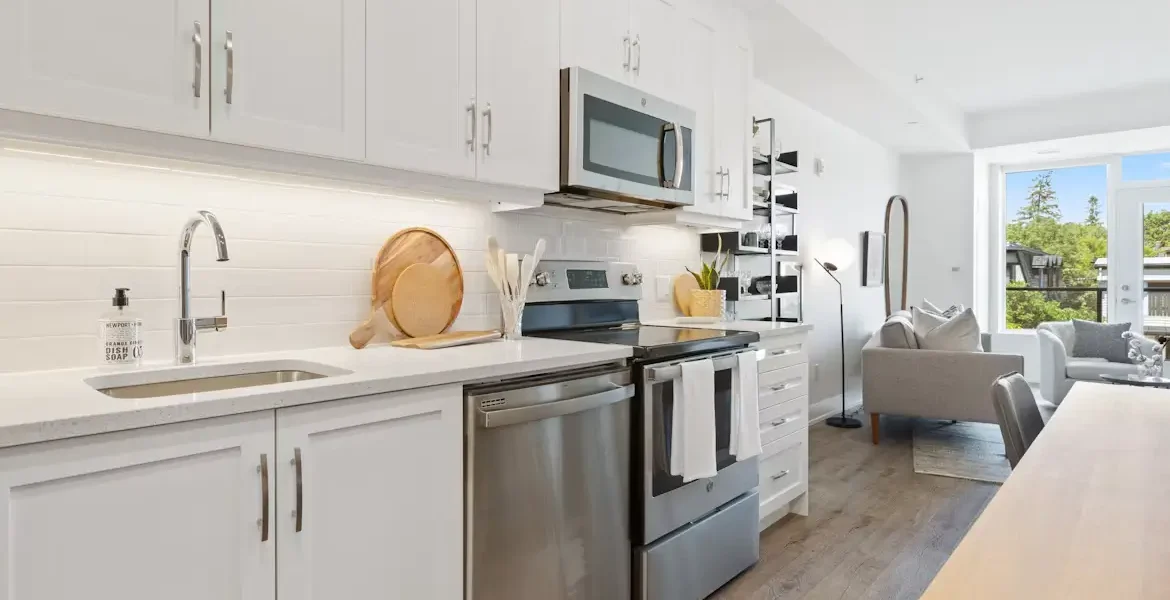
A low-maintenance kitchen can save landlords hours of cleaning, reduce repair costs and give tenants fewer reasons to report everyday problems. The best results come from combining durable surfaces with simple layouts and fittings that are easy to replace. These choices may cost slightly more during a refurbishment, but they often deliver better value across several tenancies.
Designing for Easy Cleaning
Start with flat, accessible surfaces that tenants can wipe without special products. Handleless cupboard doors look tidy, although simple bar handles may be easier and cheaper to replace after damage. Avoid detailed mouldings, open shelving and narrow gaps beside appliances, as these areas collect dust and grease.
Many low-maintenance kitchen solutions favour smooth cabinet fronts and easy-clean finishes. Matt surfaces can hide fingerprints, while mid-tone colours tend to disguise small marks better than pure white or very dark shades.
Leave enough floor space around bins and appliances for a mop. A continuous sheet floor or large tiles with narrow grout lines will also reduce the number of dirt traps.
Shielding Splash Zones Effectively
Protect the wall behind the hob and sink, where cooking residue, steam and water cause the most wear. Painted walls may stain or peel in these areas, while numerous small tiles create grout lines that need regular scrubbing.
Landlords planning a refurbishment can consider toughened glass splashbacks for kitchens as a smooth, wipe-clean option. Accurate measurements matter, so confirm the positions of sockets, cupboards and extractor fittings before ordering or installation.
Extend the protected area far enough to catch splashes from pans and washing-up. Seal edges carefully with a suitable kitchen sealant to stop moisture reaching the wall. Tenants should also receive simple cleaning instructions, including a warning against abrasive pads that could mark the finish.
Selecting Robust Countertop Materials
Choose worktops according to the likely level of use, repair options and replacement cost. Laminate is affordable and available in many finishes, but exposed joints need careful sealing to prevent swelling. Compact laminate offers a slimmer profile and better moisture resistance, although installation can be more demanding.
Quartz and other engineered surfaces resist many everyday stains, yet heavy impacts and extreme heat can still cause damage. Stainless steel suits some contemporary properties and handles frequent cleaning well, though scratches will become visible over time.
Whatever material you select, keep the design simple. Limit joins around sinks and fit matching upstands where the worktop meets the wall. A common colour and readily available pattern will make a damaged section easier to match several years later.
Reducing Routine Maintenance Inquiries
Small design decisions can prevent repeated calls about loose fittings, blocked extractors and water around sinks. Fit dependable hinges, metal drawer runners and taps with replaceable cartridges. Choose an extractor with filters that tenants can remove without tools, then explain how often they should be cleaned.
Give tenants a one-page guide covering suitable cleaning products, ventilation and spill removal. Include photographs if an unfamiliar fitting needs attention. Keep a record of product names, colour codes and dimensions for worktops, doors and handles. When a part fails between tenancies, this information can turn a lengthy search into a straightforward replacement. A small stock of matching handles, hinges and sealant can also keep minor repairs quick and consistent.
The final inspection should focus on the places where water, heat and grease meet surfaces. Properly sealed sink edges, an accessible extractor filter and an intact splashback will do more to limit future maintenance than decorative extras that are difficult to clean or replace.