
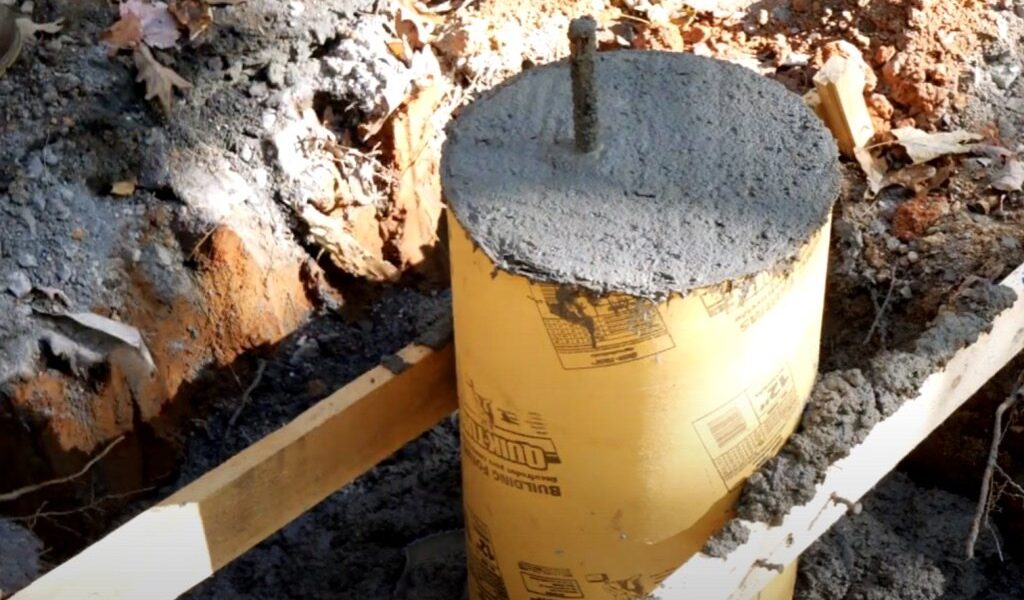
Most homeowners guess wrong on footing size, and that mistake can sink a deck literally. A cracked footing, a failed inspection, or a leaning pergola often traces back to one decision: the diameter of the cardboard form you dropped in the hole. Here is the answer most builders agree on.
For a standard 6×6 wood post, the most common and recommended Sonotube size is 12 inches in diameter. While the traditional “3x rule” would suggest an 18-inch tube, a 12-inch tube meets most residential building codes and provides a sufficient footprint for a 6×6 post base bracket. This guide covers when to go larger, how deep to dig, and how much concrete to buy.
TLDR: The Direct Answer
A 12-inch diameter Sonotube is the standard choice for a 6×6 post in most residential applications. It fits Simpson Strong-Tie post bases with proper clearance, handles typical deck loads on average soil, and keeps concrete costs reasonable. You may need an 18-inch tube or a belled footing in clay soil, for heavy loads like hot tubs, or when local code requires it. Depth should always reach below your local frost line, typically 36 to 42 inches in northern states.
Quick Facts: Sonotube Sizing at a Glance
- Standard size for 6×6 posts: 12-inch diameter
- Actual 6×6 post dimensions: 5.5 inches by 5.5 inches (nominal vs. actual)
- Minimum concrete PSI: 3,000 PSI; 4,000 PSI recommended for freeze-thaw zones
- Concrete per linear foot (12-inch tube): 0.785 cubic feet
- Common frost line range: 0 inches (Florida) to 60 inches (northern Minnesota)
- Recommended post bracket: Simpson Strong-Tie EPB66 with 1-inch standoff
- Rebar requirement: Not required by DCA 6, but 4 pieces of #4 rebar is professional best practice
The Standard Rule for Sizing Sonotubes
Nominal vs. Actual Dimensions
A “6×6” post does not measure 6 inches on each side. After drying, the actual dimensions are 5.5 inches by 5.5 inches. A 12-inch Sonotube gives you roughly 3.25 inches of space on each side of the post, which is plenty for a Simpson Strong-Tie EPB66 bracket that requires a minimum 4-inch distance from pier center to concrete edge for full loads.
The 3x Rule vs. the 2x Rule
Two rules of thumb circulate on job sites. The 3x rule says tube diameter should equal three times the post width, which works out to 18 inches for a 6×6. The 2x rule lands at 12 inches. Neither is an official code requirement. Actual footing size comes from engineering calculations based on soil and load.
In practice, most residential builders skip the math and go with 12 inches. It costs less in concrete, requires a smaller hole, and satisfies the vast majority of local inspectors for standard deck construction.
When a 12-Inch Tube Is Not Enough
Local Building Codes
Your local building inspector has the final say. The IRC (International Residential Code) sets baseline standards, but municipalities adopt versions with amendments. The 2024 IRC, which most states follow as of recent code cycles, updated flashing requirements and material specs but left footing size determination largely unchanged. Some jurisdictions require stamped engineering for any deck footing, regardless of tube size. Always check with your local building department before you pour.
Soil Bearing Capacity
Soil type plays a bigger role in footing size than most DIYers realize. The IRC Table R401.4.1 assigns presumptive bearing values to different soils. Crystalline bedrock handles 12,000 pounds per square foot (psf). Sandy gravel handles 3,000 psf. Sand handles 2,000 psf. Clay, one of the most common soils in residential areas, only handles 1,500 psf.
Here is what that means in real numbers. If a single post supports a 50-square-foot tributary area at 50 psf total load, that footing carries 2,500 pounds. On sandy gravel, a 12-inch tube works fine. On clay, the math demands closer to an 18-inch diameter. In weak soils, the smartest move is to keep the 12-inch tube and bell out the bottom to 20 inches or more.
Load-Bearing Requirements
Residential decks are designed for 40 psf live load plus 10 psf dead load, totaling 50 psf. Add a hot tub, and the load in that area jumps to roughly 100 psf. For heavy structures, an 18-inch tube or a Bigfoot Systems bell footing (the BF28 model accepts a 12-inch tube and creates a 28-inch base) may be necessary. When in doubt, hire an engineer.
Footings vs. Piers: Do You Need a Wider Base?
These terms get thrown around interchangeably, but they mean different things. The footing is the wide concrete base at the bottom that contacts the soil and spreads the load. The pier is the vertical concrete column that rises from the footing to ground level. A Sonotube forms the pier, not the footing.
Many experienced builders use a hybrid approach. They dig the hole wider at the bottom, pour a 16 to 20-inch footing pad directly in the ground, then set a 12-inch Sonotube on top of that pad. This gives you the wide bearing surface of a large footing without paying for a full-depth 18-inch tube. Bigfoot Systems footing forms are designed exactly for this purpose.
How Deep Should Your Sonotube Go?
Depth is not optional. The bottom of your footing must sit below the frost line for your area. Frost heave occurs when groundwater freezes and expands, pushing your footing upward over time. This can crack concrete, tilt posts, and destroy the structural integrity of your deck.
Frost line depths vary dramatically across the United States. Southern states like Florida and Louisiana have a 0-inch requirement. Most northern states fall between 36 and 48 inches. Minnesota requires 42 inches in the south and 60 inches in the north. Check with your local building department for the exact number.
How Much Concrete Do You Need?
A 12-inch Sonotube holds 0.785 cubic feet of concrete per linear foot of depth. An 80-pound bag of ready-mix concrete yields approximately 0.60 cubic feet. Here is a quick reference for common depths.
- 3 feet deep (36 inches): 2.36 cubic feet = 4 bags (80 lb)
- 4 feet deep (48 inches): 3.14 cubic feet = 6 bags (80 lb)
- 5 feet deep (60 inches): 3.93 cubic feet = 7 bags (80 lb)
Always buy 10 to 15 percent extra to account for over-excavation and waste. Use a 3,000 to 4,000 PSI concrete mix. Quikrete 5000 is a popular choice at home centers and offers extra durability in freeze-thaw climates.
Setting the Post: Embedded vs. Post Brackets
Burying a wood post directly in wet concrete is a recipe for rot. The moisture gets trapped against the wood, and even pressure-treated lumber will eventually break down. The professional approach is to set a galvanized steel post base into the concrete while it is still wet.
The Simpson Strong-Tie EPB66 is the industry standard for new construction. It uses an embedded steel pipe rather than a J-bolt and provides a 1-inch standoff to keep the post end dry. For existing concrete, the ABU66 adjustable standoff base works as a retrofit. Building code requires a minimum 1-inch separation between the bottom of the wood post and the top of the concrete.
Frequently Asked Questions
Can I use a 10-inch Sonotube for a 6×6 post?
It is not recommended for structural applications. A 10-inch tube leaves very little room for centering a 6×6 post base bracket. Most local codes require a minimum clearance that a 10-inch tube simply cannot provide. You also sacrifice significant bearing surface at the soil line. Stick with 12 inches as your minimum for any 6×6 deck post.
Do I need rebar in my Sonotube?
The AWC DCA 6 prescriptive guide does not require rebar in deck footings. However, most structural engineers recommend it. The professional standard for a 12-inch pier is four pieces of vertical #4 rebar (half-inch diameter) tied with #3 horizontal ties at 12 to 18-inch spacing. Many local building departments that require engineering will specify rebar in their plans.
Should I put gravel at the bottom of the hole?
Building codes prefer that footings bear directly on undisturbed native soil. If you over-excavate, backfill with compacted crushed stone in thin lifts. Loose gravel under a footing can wick moisture and create a weak point. A few inches of compacted 3/4-inch clean stone is acceptable to bring the grade up, but it should never replace proper soil bearing.
What PSI concrete should I use for deck footings?
Use a minimum of 3,000 PSI for standard residential deck footings. For freeze-thaw climates or heavy loads, 4,000 PSI air-entrained concrete is the better choice. Quikrete 5000 is widely available at home centers and provides extra strength for minimal additional cost.
How far above grade should the Sonotube extend?
Extend the Sonotube so the top of the concrete pier sits 2 to 6 inches above finished grade. This prevents water from pooling around the post base and keeps the end grain of your wood post away from soil moisture.