
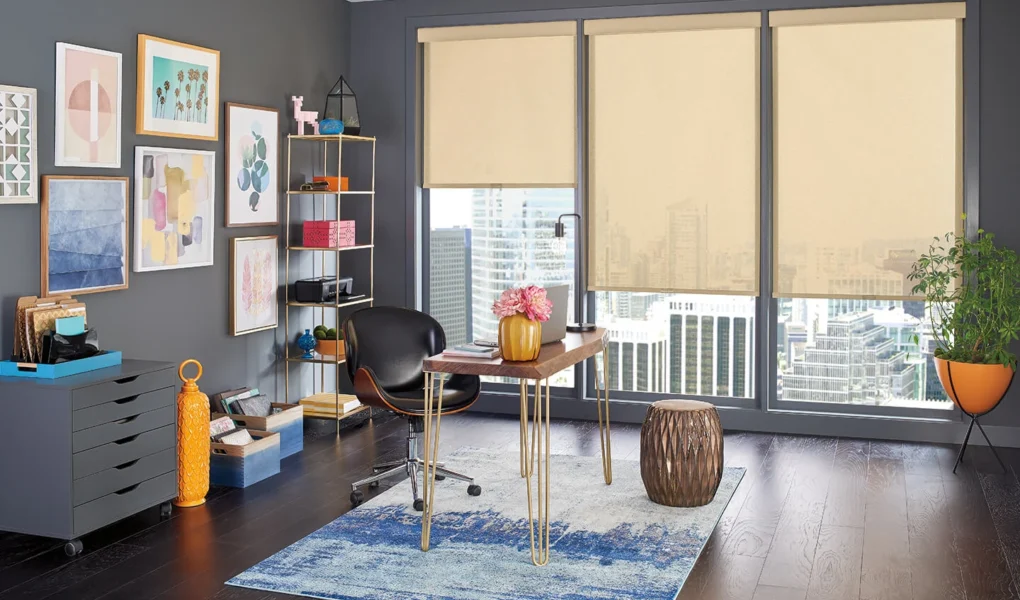
Large windows are the crown jewels of a home, offering expansive views and flooding a room with natural light. However, in the Canadian climate, they also present unique challenges. Have you noticed how a room can feel cozy at 7 p.m. but harsh and overheating at 2 p.m.? This push-and-pull is normal, as daylight shifts dramatically by season and location.
The good news is that the best blinds for large windows can fix these issues without requiring changes to your walls, furniture, or layout. The key is choosing based on the room’s “job”—whether that is sleep, work, entertaining, or easy cleaning—and then selecting the material and mount that supports that function.
The Canadian Climate Factor: Light and Temperature
Canadian homes deal with two shifting forces: daylight patterns and temperature swings. Summer brings early sunrises and late sunsets, while winter features a low-angle sun that creates sharp glare and bright reflections off the snow. The right choice in window coverings helps you control the light you feel, not just the light you see.
While blinds won’t replace high-quality insulation, they create a small buffer near the glass. This layer of air makes seating areas near large windows feel less drafty in the winter and less intense in the direct summer sun. The result is a significant win for daily comfort: fewer screen reflections, less squinting, and privacy that doesn’t require living in total darkness.
Selecting by Function and Style
To find the perfect fit, separate your goals into three categories: light style, privacy timing, and maintenance.
- Light Style: Do you want slatted control to redirect light, or fabric filtering to smooth it out?
- Privacy Timing: Do you need coverage during the day, at night, or both?
- Maintenance: How often are you willing to dust? Is humidity a factor, such as in a kitchen or bathroom?
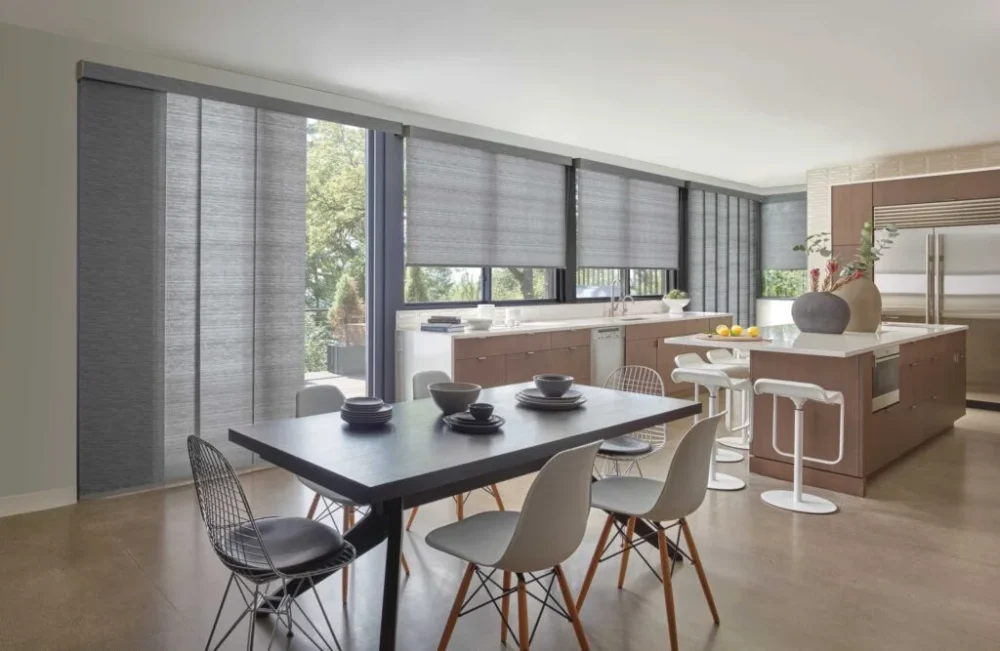
If the “main job” of a living room is balanced daylight, or a home office requires bright hotspot control, the product category becomes much clearer. For very wide spans, hardware is the deal-breaker. Large windows expose weak headrails and flimsy brackets quickly. This is why wide roller shades, panel track systems, and modern fabric verticals remain popular—they are specifically engineered for width without sagging.
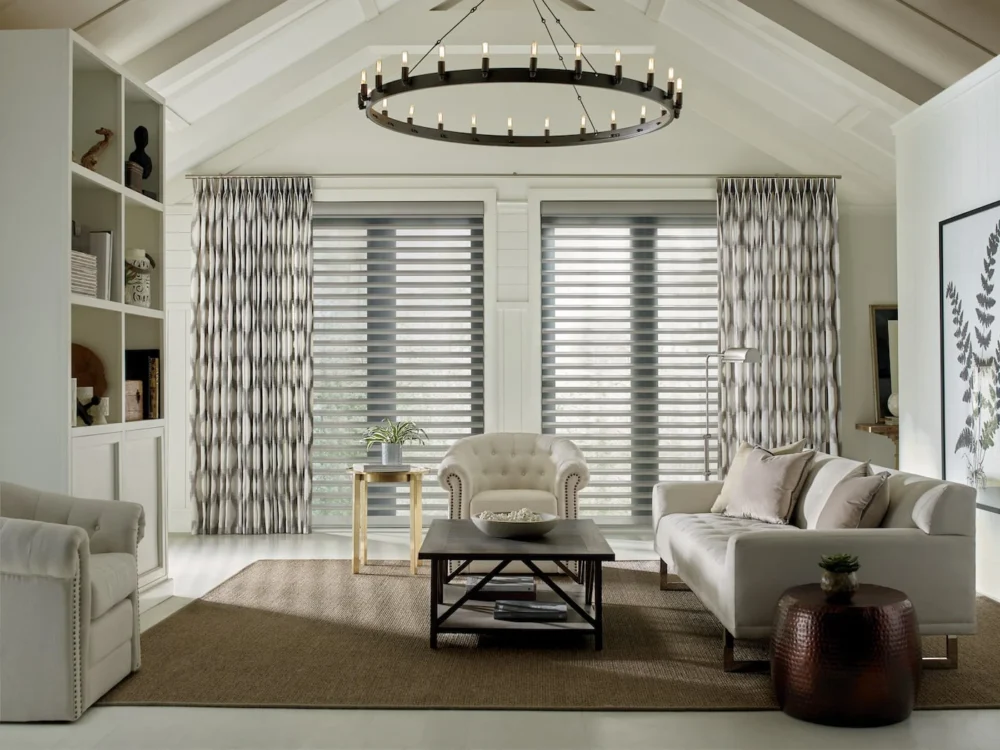
Material Performance
- Faux Wood: The all-around performer. It is wipeable, humidity-tolerant, and forgiving in busy homes.
- Real Wood: Adds a premium look and warmth, best suited for drier rooms where moisture won’t warp the slats.
- Aluminum: Lightweight and budget-friendly. Great for basements or utility rooms, though it can bend in high-traffic zones.
- Modern Fabric Verticals: One of the most practical answers for patio doors and wide openings, offering a softer aesthetic than old-school plastic versions.
The Science of the Perfect Fit: Measuring and Mounting
Mount choice is where many homeowners accidentally undo a good purchase. An inside mount looks built-in and tidy, but it requires sufficient frame depth. An outside mount provides more coverage, which enhances privacy and reduces the “light leaks” that often occur at the edges of large spans.
To prevent the dreaded “mystery gap,” always follow the three-point measuring rule:
- Width: Measure at the top, middle, and bottom. Use the smallest number for an inside mount.
- Height: Measure at the left, center, and right. Use the largest number for an inside mount.
- Depth: Confirm your frame depth before ordering to avoid a blind that protrudes awkwardly.
For outside mounts, ensure you add enough overlap on both sides for maximum seclusion. Also, consider the “open position” like you would furniture planning. Panels and verticals need stacking space on the sides, while rollers need clearance at the top for the tube.
Room-by-Room Strategy
- Home Office: Focus on hotspot control. Tilting slats upward redirects light to the ceiling, keeping the room bright while eliminating screen glare.
- Bedroom: Consistency is key. Streetlights and reflected snow can disrupt sleep. Prioritize blackout fabrics and consider layering with curtains for a softer feel.
- Kitchen/Bathroom: Choose humidity-friendly, wipeable materials like faux wood to handle steam and grease without warping.
- Nursery: Safe, cordless operation is a priority. Consistent dimming supports nap schedules regardless of the early summer sun.

Pro Tips for Large Glass
Large windows reveal hardware quality and alignment issues fast. If a headrail flexes, the covering will look uneven. If the lift isn’t smooth, you’ll avoid using it. This is why wide-span categories like panel tracks and wide rollers are standard for big glass.
Consider motorization for truly massive windows. It makes daily use consistent and reduces the uneven pulling that can wear out internal parts over time. Furthermore, don’t forget the psychological impact: a bare window can feel “hard” in the winter. Adding a covering softens the edges of the room and makes the space feel more inviting immediately.
Maintenance and Troubleshooting
Maintenance is usually simple but varies by material. Faux wood and aluminum are easy to wipe, while fabric systems may require light vacuuming. A quick weekly dusting prevents the six-month buildup that makes cleaning feel like a chore.
If your new blinds feel “off,” check three things:
- Measurement: Was the width taken at three spots?
- Mount: Would an outside mount overlap solve your light line issues?
- Operation: Are you pulling evenly, and is the headrail level?
Comparison Table for Large Window Options
| Option | Best For | Strength | Key Note |
| Vertical (Fabric) | Doors + Wide Spans | High | Choose modern fabric for a softer look |
| Roller (Wide) | Minimal Modern Look | High | Hardware quality is critical for wide spans |
| Cellular (Wide) | Comfort near Big Glass | Medium-High | Provides a softer light and better insulation |
| Panel Track | Very Wide Openings | High | Requires dedicated stacking space on the side |
By choosing the right category for the job and measuring with precision, you can turn your large windows from a source of glare and drafts into a perfectly controlled feature of your home.