
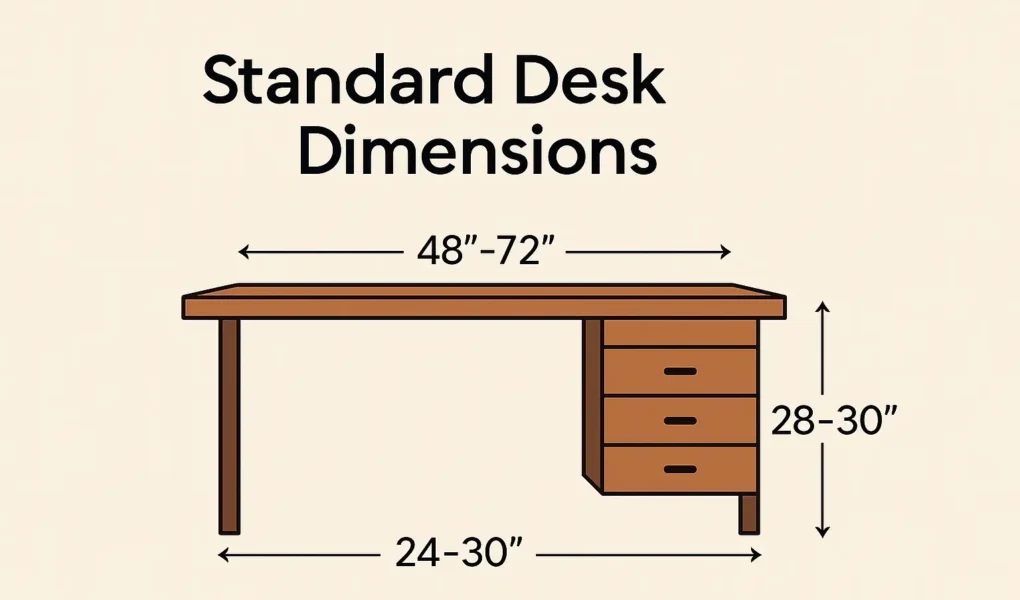
Writing desk dimensions range from 76–152 cm width, 45–75 cm depth, and 71–76 cm height, with solid wood writing desks requiring at least 60 cm depth for forearm support, 73 cm average height for neutral posture, and 91 cm minimum width for functional writing setups.
A writing desk defines both comfort and output.
Incorrect dimensions create measurable strain within 30–60 minutes of seated work, particularly in shoulders and wrists. Correct dimensions support neutral posture, stable writing surfaces, and efficient movement within a workspace footprint of 150 × 200 cm.
What dimensions define a standard writing desk?
Standard writing desk dimensions include 76–152 cm width, 45–75 cm depth, and 71–76 cm height, with compact desks starting at 60 cm width and large executive writing tables extending to 183 cm for multi-document work.
Width determines usable workspace.
A 91–107 cm desk supports laptop use plus handwritten notes. A 122–137 cm desk supports document spread, sketching, or dual-task workflows. Depth below 50 cm reduces forearm support and increases neck flexion angle beyond 20 degrees.
According to occupational workstation guidelines, desk depth directly affects document positioning and visual strain during extended tasks.
How deep should a writing desk be for comfort?
Writing desk depth should measure 60–75 cm to support full forearm contact, maintain neutral wrist position, and allow document placement at 30–40 cm viewing distance without forward leaning.
Depth controls posture stability.
A 45 cm desk forces elbows off the surface, increasing shoulder load by up to 15 percent. A 60 cm depth allows full arm support and reduces trapezius muscle activation during writing sessions exceeding one hour.
Deeper desks above 75 cm suit drafting or multi-layer document work but require larger room footprints.
What height should a writing desk be for proper posture?
Writing desk height should measure 71–76 cm for individuals between 165–183 cm, ensuring elbows rest at 90–110 degrees, wrists remain neutral, and knee clearance measures at least 3–5 cm under the desk frame.
Height controls joint alignment.
Incorrect height alters wrist angle beyond 15 degrees, increasing strain on tendons associated with repetitive strain injury. A 2–3 cm height error creates noticeable discomfort within extended writing sessions.
A personalised method uses elbow height minus 3 cm to calculate ideal desk height.
What width is required for different writing tasks?
Writing desk width requirement depends on task complexity, with 76–91 cm sufficient for basic writing, 91–107 cm supporting laptop and notes, and 122–152 cm enabling document spreading, sketching, or reference work.
Width defines workflow efficiency.
Narrow desks restrict lateral movement and increase object stacking. Wider desks allow simultaneous placement of notebooks, reference materials, and tools without overlap, reducing task switching time.
Large writing desks exceeding 150 cm suit dedicated home offices with minimum room widths above 250 cm.
What clearance space is needed around a writing desk?
Writing desk clearance requires 90–120 cm behind chair for movement, 60–70 cm knee width under desk, and total spatial footprint of desk width plus 100 cm and depth plus 150 cm for functional access.
Clearance prevents restriction.
Insufficient space forces awkward entry and exit angles, increasing daily friction in use. According to workspace layout planning principles, clearance zones directly influence usability and long-term comfort.
Rooms under 8 m² require compact desks below 100 cm width.
Are custom writing desk dimensions worth it?
Custom writing desk dimensions provide precise ergonomic fit by matching desk height, width, and depth to user body proportions, room constraints, and task requirements, reducing posture-related discomfort compared to standard fixed-size desks.
Customisation solves variance.
Standard desks assume average proportions, but torso and leg ratios vary significantly. A 170 cm individual may require either 71 cm or 75 cm desk height depending on limb distribution.
Wall-mounted desks allow height installation at 65–75 cm, offering precise adjustment without mechanical systems.
Which materials influence writing desk usability?
Writing desk material influences surface friction, durability, and visual comfort, with solid wood providing moderate texture, glass creating reflective glare, and laminate offering smooth low-maintenance surfaces with consistent finish.
Material affects performance.
Solid wood surfaces such as oak and walnut reduce paper movement and improve tactile feedback. Glass surfaces increase glare under lighting above 300 lux, affecting visual comfort.
Material density also impacts stability. Hardwood desks reduce vibration and wobble during writing tasks requiring precision.
What ergonomic principles improve writing comfort at a desk?
Writing desk ergonomics require neutral wrist angle below 15 degrees, forearms parallel to floor, shoulders relaxed, and lumbar-supported seating with feet flat, ensuring reduced strain across sessions lasting more than 60 minutes.
Ergonomics prevent fatigue.
Incorrect positioning increases muscle activation in shoulders and wrists. Maintaining neutral alignment reduces cumulative strain associated with prolonged writing tasks and improves endurance across multi-hour sessions.
Guidance from human factors engineering research supports adjustable setups over fixed configurations.
Writing Desk Dimensions Checklist
Use this framework before purchasing or commissioning a desk.
- Measure elbow height and subtract 3 cm to define ideal desk height
- Confirm minimum width of 91 cm for functional writing setup
- Verify depth of at least 60 cm for full forearm support
- Check knee clearance of 60–70 cm width and 50 cm depth
- Test stability with less than 2–3 mm movement under pressure
- Ensure drawer depth ranges from 5–8 cm (shallow) and 25–30 cm (storage)
- Confirm edge profile avoids sharp pressure points on forearms
- Calculate total footprint including chair clearance space
- Position desk perpendicular to window to reduce glare
- Verify cable management clearance of 8–10 cm at rear
For complete furniture consistency across your workspace, explore https://petalwoodinteriors.co.uk/collections/writing-desk-collection for solid wood designs aligned with these dimensional standards.
Final decision: what writing desk dimensions work best overall?
The best writing desk dimensions combine 73 cm height, 60 cm depth, and 100–120 cm width for most users, providing balanced ergonomics, sufficient workspace, and compatibility with typical UK room sizes between 10–20 m².
Standard sizes work for many users.
Custom dimensions provide optimal results when daily usage exceeds four hours or when body proportions fall outside average ranges. Accurate measurement ensures long-term comfort, improved posture, and consistent productivity.