
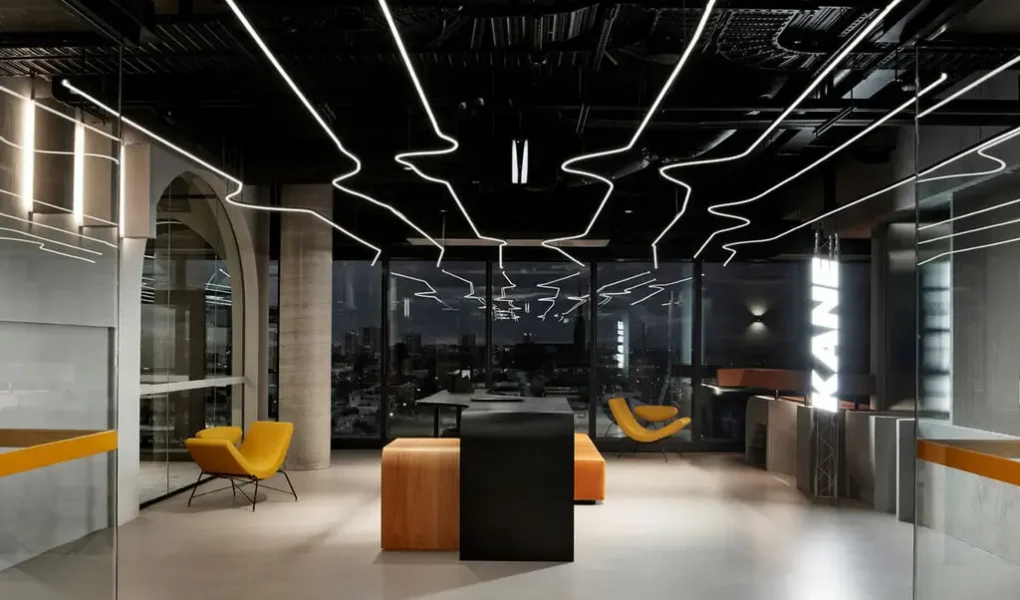
In commercial and architectural design, LED strip lighting has quickly evolved from a simple accent tool into one of the most strategic elements in modern lighting schemes. From retail flagships and hospitality environments to offices, façades, and public spaces, designers are leveraging advanced strip systems to create immersive, efficient, and highly flexible visual experiences.
As we move deeper into the mid‑2020s, several clear trends are reshaping how professionals specify and deploy LED strip lighting across commercial and architectural projects. This article explores the most important directions, with a special focus on new technologies like COB LED strips, market dynamics, and practical considerations for lighting specifiers and project owners.
Shift from Decorative to Primary Lighting
LED strip lighting was once seen primarily as a decorative accessory, used mainly for cove accents, display shelves, or mood lighting in hospitality. Today, it increasingly functions as a primary lighting layer, capable of delivering task-level illumination, wayfinding, and ambient light in larger commercial and architectural spaces.
Several factors are driving this shift:
- Higher lumen output and improved efficacy make strips viable for general lighting in retail, office, and mixed-use spaces.
- Advanced optics and diffusers minimize glare while maintaining uniformity across long runs.
- Integration with architectural profiles allows “hidden” or “invisible” fixtures that preserve clean lines while delivering robust illumination.
This transition pushes lighting designers to treat strip systems not as an afterthought but as a core part of the initial lighting concept.
The Rise of COB LED Strip Technology
One of the most influential trends in LED strip lighting is the rapid adoption of chip‑on‑board (COB) LED strips in professional commercial and architectural projects. Unlike traditional SMD strips, COB designs pack many LED chips closely together on the board, producing a continuous, dot‑free line of light with excellent visual uniformity.
Key advantages that make COB strips attractive for commercial and architectural use include:
- Seamless light output with no visible diode hotspots, ideal for exposed and close‑view applications like hotel lobbies, luxury retail shelving, and museum displays.
- High luminous efficacy and brightness, allowing designers to meet both accent and general lighting requirements with compact fixtures.
- Strong color rendering performance, with many COB products reaching CRI 90–97 and excellent TM‑30 fidelity and gamut scores, making them suitable for fashion, food, and art environments.
These performance benefits are also reflected in the market: the global COB LED strip segment is projected to grow steadily throughout the next decade, supported by energy‑efficiency policies and demand for visually seamless lighting in high‑end commercial and architectural projects. For a deeper dive into segment performance, regional growth patterns, and application breakdowns, many specifiers now reference dedicated COB LED strip market analyses linked to 2025 forecasts and beyond.
Human‑Centric and Tunable White Strategies
Another major trend is the integration of human‑centric lighting (HCL) principles into strip‑based solutions, especially in workplaces, hospitality, healthcare, and education. Designers increasingly specify tunable white LED strips that can vary color temperature across a range—typically from warm 2700 K to cool 6500 K—to support circadian rhythms and user comfort.
Applications include:
- Offices and co‑working spaces where CCT is adjusted throughout the day to support alertness and reduce fatigue.
- Hotels and restaurants where warm tones create evening relaxation while neutral tones support daytime functionality.
- Healthcare and senior living environments where appropriate light cycles can influence sleep quality and overall well‑being.
Pairing tunable strips with intelligent controls and sensors allows dynamic scenes that respond to time‑of‑day, occupancy, or even external daylight levels, further optimizing both experience and energy use.
Deep Integration with Architecture
In contemporary architecture, light is increasingly treated as a material—with LED strips acting as lines that carve, define, and animate space. Architects and lighting designers now collaborate from early design stages to embed strip lighting into ceilings, walls, floors, joinery, and façades.
Key integration trends include:
- Recessed linear slots in ceilings and walls that provide continuous light bands aligned with architectural geometry.
- Perimeter and edge lighting that emphasizes boundaries, reveals depth, and visually “lifts” surfaces such as floating ceilings, stair treads, or wall panels.
- Microlinear profiles with ultra‑slim dimensions that disappear into millwork and details while still delivering high‑quality light.
COB strips are particularly well‑suited for these applications because their dot‑free output allows shallow profiles and narrow cavities without sacrificing visual continuity.
Smart, Connected, and Data‑Driven Systems
Smart lighting has moved firmly into the mainstream, and LED strip systems are no exception. In commercial and architectural environments, strips are increasingly specified with:
- DALI, DMX, or 0–10 V interfaces for centralized control in offices, retail, and public facilities.
- Wireless protocols such as Bluetooth Mesh, Zigbee, or proprietary platforms for flexible retrofits and smaller commercial spaces.
- Integration with building management systems (BMS) and IoT platforms, enabling energy monitoring, maintenance alerts, and space‑use analytics.
This connectivity allows dynamic scenes, predictive maintenance (e.g., identifying segments showing abnormal degradation), and alignment with sustainability targets through ongoing optimization of usage patterns.
Sustainability, Efficiency, and Regulatory Pressure
Sustainability is no longer just a marketing term—it is a central driver of specification decisions in commercial and architectural projects. Stricter energy codes, green building certifications, and corporate ESG commitments are pushing stakeholders toward high‑efficacy LED strip solutions.
Key sustainability‑related trends include:
- Preference for high‑efficacy COB and CSP strip solutions that maximize lumens per watt while maintaining quality of light.
- Increased focus on product lifespans (e.g., L80 or L90 ratings) and reduced maintenance, especially in 24/7 facilities.
- Lifecycle thinking—selecting modular profiles, accessible drivers, and replaceable components to extend system life and minimize waste.
Market research suggests that demand for energy‑efficient COB LED strip solutions will be a significant contributor to overall COB LED market growth between 2025 and 2035, especially in regions prioritizing decarbonization and smart building policies. For planners and procurement teams, referencing a 2025‑focused global COB LED strip market analysis helps align project decisions with broader policy and investment trends.
You can explore how commercial, architectural, and industrial applications are reshaping demand, as well as how regional policies and technology innovation are influencing adoption curves, through specialized COB strip market reports hosted by manufacturers and industry platforms.
Higher Visual Comfort and Design Refinement
As LED strips move into more prominent and exposed roles, visual comfort and refinement of light quality are becoming top priorities. Architects and lighting designers now look beyond simple brightness and CCT values to consider glare, color rendering, and perceived uniformity.
Emerging best practices include:
- Using high‑CRI strips (90+) with stable R9 and TM‑30 metrics for retail, hospitality, museums, and premium office spaces.
- Employing low‑UGR optical systems in linear profiles for work environments, meeting WELL and LEED lighting criteria.
- Favoring COB and high‑density SMD strips combined with well‑designed diffusers to deliver continuous, shadow‑free lines of light.
The result is a shift from “just bright enough” to “visually comfortable and brand‑appropriate” lighting that supports both user experience and brand storytelling.
Outdoor, Façade, and Urban Applications
Another growth area for LED strip lighting is the exterior envelope of buildings and public spaces. Weatherproof and UV‑resistant strip systems enable designers to create dynamic façades, highlight structural features, and improve safety in circulation zones.
Notable trends include:
- RGB and RGBW strips used for programmable façades, brand‑colored night scenes, and event‑based lighting schemes.
- High‑output white or tunable white strips integrated into canopies, pathways, and landscape features.
- Robust IP65–IP68 rated products with corrosion‑resistant housings and connectors for long‑term durability in harsh climates.
Here again, COB technology is starting to appear in exterior linear products where continuous lines of light greatly enhance the perceived quality of architectural façades.
Market Outlook: Commercial and Architectural Focus
From a business perspective, the commercial and architectural segments represent some of the strongest growth opportunities for advanced LED strip technologies, especially COB. Key drivers include:
- Global shifts toward energy‑efficient, controllable lighting in offices, retail, hospitality, transportation hubs, and civic buildings.
- Increased renovation and repositioning of existing properties to meet modern tenant expectations and regulatory requirements.
- Expansion of smart city and infrastructure projects that integrate intelligent lighting into public and semi‑public spaces.
Market studies indicate that the COB LED strip category is expected to expand at a solid compound annual growth rate over the coming decade, powered by both new construction and retrofit activity in commercial and architectural environments. Stakeholders who understand these dynamics are better positioned to time investments, negotiate with suppliers, and align product strategies with future demand.
For specifiers, project decision‑makers, and distributors wanting a detailed breakdown of segment size, regional demand scenarios, and long‑term CAGR assumptions specific to COB LED strip lighting, a dedicated 2025 global COB LED strip market analysis is a powerful planning tool.
Practical Recommendations for Specifiers and Designers
To translate these trends into successful real‑world projects, commercial and architectural professionals can keep several practical guidelines in mind:
- Start lighting integration early in the architecture and interior design process to fully exploit linear and strip opportunities.
- Prioritize COB and high‑density strip solutions where lines of light are visible or close to eye level to avoid dotting and unevenness.
- Specify high‑CRI and proper CCT ranges based on application—warmer for hospitality, neutral for offices, and tailored mixes for retail and galleries.
- Leverage smart controls and data to fine‑tune usage patterns, enhance user experience, and document energy savings.
- Plan for maintainability by choosing accessible drivers, modular profiles, and products with clear lifetime and warranty data.
Combining awareness of macro‑trends with careful product selection and coordinated design unlocks the full potential of LED strip lighting in complex commercial and architectural contexts.
Conclusion
From COB technology and human‑centric strategies to deep architectural integration and smart control, LED strip lighting is redefining what is possible in commercial and architectural spaces worldwide. The segment’s projected growth—particularly for high‑performance COB-based solutions—confirms that linear and strip systems are no longer niche accessories but vital components of future‑ready lighting strategies.
For professionals across the value chain—architects, lighting designers, engineers, contractors, and asset managers—staying ahead of these trends is essential to delivering spaces that are visually compelling, operationally efficient, and aligned with evolving sustainability and user‑experience expectations.