
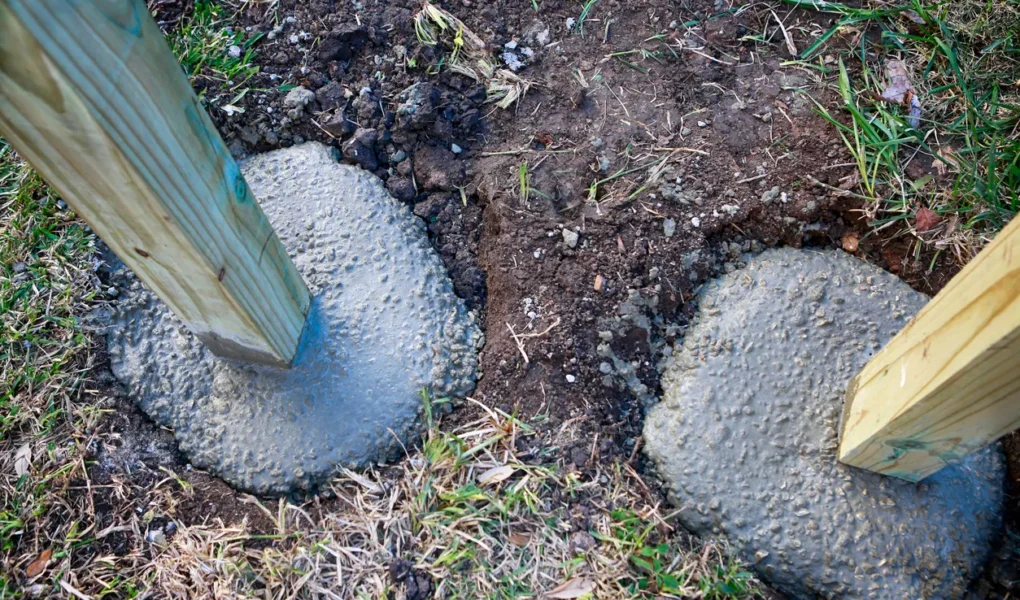
If you’re figuring out how many bags of concrete for a 6×6 post, you’re already doing the right thing. Most post failures don’t happen because people use bad materials — they happen because the hole was too small or the concrete was underestimated. The good news is that once you understand a few basics, this becomes a very manageable, even satisfying, part of the project.
Let’s walk through it the same way a seasoned installer would.
What a 6×6 Post Really Is?
A standard 6×6 post doesn’t actually measure six inches square. The true size is 5.5 inches by 5.5 inches, and that difference matters when you’re calculating how much concrete fills the space around it. Concrete volume isn’t about the post itself — it’s about the hole you dig.
In real-world installations, most professionals aim for a hole that’s wide enough to resist movement and deep enough to stay put through seasonal changes. When that’s done correctly, the post feels solid from day one and stays that way for years.
Hole Size Drives Everything
For a typical fence or gate post, a hole between 12 and 18 inches wide is common, with depth depending on post height and climate. A 6-foot fence post usually needs around 24 to 30 inches of depth, while taller fences or colder regions often push that to 36 inches or more to stay below the frost line.
Wider and deeper holes may feel like extra work, but they pay off. Posts set this way don’t wobble, don’t lean, and don’t need “fixing later.”
So… How Many Bags of Concrete for a 6×6 Post?
Once you factor in realistic hole sizes and a small gravel base, the numbers become pretty consistent.
For most standard installations, you’ll use about 5 to 6 bags of 80-lb concrete, or 8 to 9 bags of 50-lb concrete, per 6×6 post. Shallower holes can get by with a little less, and deeper or wider holes — especially for gates or corners — will naturally need more.
Concrete bags are inexpensive compared to re-digging a post later, so buying an extra bag or two is almost always the smart move. Most experienced builders plan for about 10–15% extra, just to be safe.
| Hole Diameter | Hole Depth | Typical Use Case | Approx. Concrete Needed | 50–60 lb Bags |
|---|---|---|---|---|
| 12 inches | 24 inches | Standard fence post (warm climates) | ~1.6–2.0 ft³ | 4–5 bags |
| 12 inches | 30 inches | Taller fence or mild frost areas | ~2.2–2.5 ft³ | 5–6 bags |
| 14–16 inches | 30 inches | Gate or corner post | ~2.8–3.4 ft³ | 6–7 bags |
| 16–18 inches | 36 inches | Heavy gate or high-wind areas | ~3.5–4.5 ft³ | 7–9 bags |
Note: These estimates assume a 4–6 inch gravel base at the bottom of the hole. For best results, it’s smart to buy one extra bag per post to account for irregular holes, loose soil, or minor over-digging.
Gravel and Drainage Make a Big Difference
Before any concrete goes in, adding 4 to 6 inches of gravel at the bottom of the hole is one of those small steps that makes a big impact. It improves drainage, keeps water from sitting against the post, and noticeably extends the life of the wood.
This is one of those details that separates posts that last 5–7 years from posts that are still solid decades later.
Choosing the Right Concrete (Keep It Simple)
Fast-setting concrete is a favorite for fence posts, and for good reason. It’s quick, clean, and doesn’t require pre-mixing. You pour it in dry, add water, and it locks the post in place within minutes. That makes it perfect for individual posts, repairs, and DIY projects where efficiency matters.
Standard concrete still has its place, especially for large pours or structural footings, but for most 6×6 fence posts, fast-setting mixes are more than strong enough and much easier to work with.
Fence Posts vs. Structural Posts
It’s worth making one important distinction. Fence posts are commonly buried directly in concrete, and when done correctly, that works very well. Structural posts — like those supporting decks or pergolas — are different. These are typically mounted above concrete footings using hardware such as Simpson Strong-Tie brackets, which keeps the wood out of constant ground moisture and greatly reduces rot.
If your project is load-bearing, local building codes usually spell this out clearly, and following them protects both the structure and your investment.
A Few Extra Steps That Pay Off
Sloping the top of the concrete slightly away from the post helps shed water instead of trapping it. Applying a protective coating or sleeve at ground level adds even more insurance. These aren’t complicated steps, but they dramatically improve longevity.
Most post failures happen right at ground level — not because concrete was used, but because moisture had nowhere to go. Good drainage fixes that.
The Bottom Line
If you’re asking how many bags of concrete for a 6×6 post, you’re already thinking ahead — and that’s a good thing. For most installations, plan on 5–6 bags of 80-lb concrete per post, add a gravel base, and don’t be afraid to go slightly bigger than the bare minimum.
Concrete is cheap. Solid, straight posts that stay put through wind, rain, and winter are priceless.