Many UK homes reach a point where there is simply not enough room. The kitchen table doubles as a desk, guests sleep on the sofa, and hobbies are squeezed into cupboards and corners. A full extension or loft conversion can help, but they are often expensive, disruptive and slow.
A garden room offers another way: a comfortable, self‑contained space in the garden that you can tailor to your lifestyle. For many homeowners in England, it’s a practical way to gain extra living space without building into the main house.
This article looks at why extra space matters, how garden rooms differ from other options, the best ways to use one, and what to consider before you invest.
Why Extra Usable Space Matters for UK Homeowners
With high property prices and generally modest plots, every square metre of functional space is valuable in the UK. Buyers are not just paying for bricks and mortar; they are paying for how flexibly a home can be used.
Extra usable space can improve your home in several ways:
- Comfort and zoning
A separate space for work, exercise or hobbies takes pressure off your main rooms. Instead of fighting over the quietest corner, family members can spread out. Clear zoning also makes a small house feel calmer and more organised. - Saleability and buyer appeal
A listing that mentions a heated garden office or studio often stands out. Even if the internal floor area is unchanged, buyers mentally add the garden room to the overall living space they feel they are getting. - Flexibility over time
A room that starts life as a home office can later become a teen den, craft room or quiet retreat. That flexibility can make your home work better for you now and for future owners later.
What Is a Garden Room and How It Differs from a Conservatory or Extension?
A garden room is a standalone building in your garden, designed as a comfortable space for work, relaxation or hobbies. Unlike a basic shed, it is usually insulated, has proper doors and windows, and includes electricity and heating.
Here’s how it compares to other options:
- Versus a traditional extension
- Extension: Physically enlarges the house and usually adds conventional value, but often requires planning permission, significant building work and higher costs.
- Garden room: Separate from the house, typically faster to install and less disruptive. The physical separation can actually be a benefit if you want a quiet workspace or teen zone away from the main living areas.
- Versus a conservatory
- Conservatory: Attached to the house, with a lot of glass. Many older conservatories are too hot in summer and too cold in winter.
- Garden room: Designed to feel more like an insulated studio or small lodge, suitable for all‑year use when specified correctly, and not limited to the back wall of the house.
- Versus a standard garden shed
- Shed: Primarily for storage, usually uninsulated and not comfortable for long periods.
- Garden room: Built as a genuine living or working space with better materials, finishes and aesthetics.
The result is something that can feel like a mini extension, without quite the same level of complexity.
Practical Ways to Use a Garden Room
Home Office or Studio
Remote and hybrid working are now common across the UK. A garden office can:
- give you a quiet, professional space for calls and focused work;
- create a clear boundary between work and home life;
- double as a studio for freelancers, therapists, designers or anyone who needs a private client‑friendly environment.
For many buyers, a ready‑made home office is an immediate tick in the box.
Guest Bedroom or Teen Hangout Space
A well‑specified garden room can make hosting much easier:
- Use it as a guest room for visiting family and friends, giving them privacy and independence.
- As children grow up, it can become a teen hangout, keeping noise slightly separate while they are still safely at home.
Even if you do not market it as permanent living accommodation, the potential will be obvious to future buyers.
Hobby Room, Gym or Creative Studio
Hobbies and exercise often need space that ordinary rooms cannot easily provide:
- A garden gym means equipment can stay set up, ready to use, without cluttering bedrooms or the living room.
- Musicians benefit from a dedicated practice space, particularly if some additional soundproofing is included.
- Artists and makers gain natural light, storage, and the freedom to leave projects out between sessions.
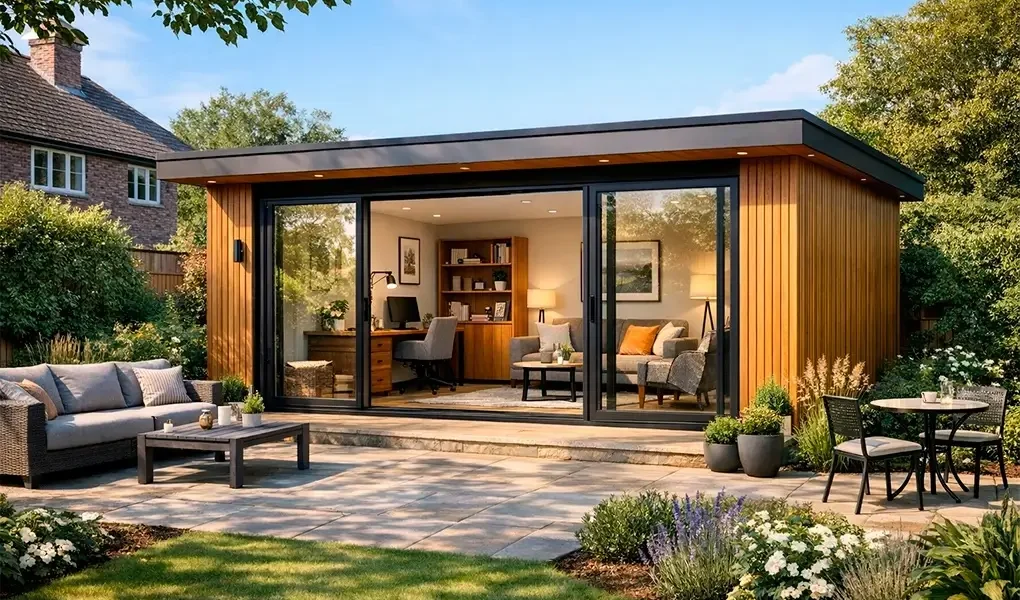
Large glazed doors and a seating area outside can turn the whole area into a premium‑feeling outdoor living space, blurring the line between inside and out
How Garden Rooms Can Increase Your Property Value
There is no universal percentage that a garden room will add to your home value, because it depends on location, build quality, size and demand in your area. However, a good garden room can support value in several ways:
- A stronger property listing
“Three‑bed home with insulated garden office/studio” usually sounds more appealing than the same house without that extra facility. - Perceived size and lifestyle upgrade
Buyers often think in terms of lifestyle rather than pure square footage. A garden room can make a compact home feel more spacious and versatile. - Wider buyer pool
A flexible, heated garden room may appeal to remote workers, growing families, hobbyists or those planning multi‑generational living. More interested buyer types can mean better offers.
When designed and built properly, a garden room is less of a “nice extra” and more of a tangible improvement to how the property functions.
Key Things to Consider When Choosing a Garden Room
Materials and Build Quality
Prioritise robust, weather‑resistant materials and proper foundations. High‑quality timber, good external cladding and durable roofing will help the building age gracefully rather than becoming a liability.
Insulation, Glazing and Electrics
To act as genuine extra living space all year:
- specify decent insulation in floor, walls and roof;
- choose double or triple glazing;
- plan enough sockets, task lighting and data points;
- include suitable heating, for example electric radiators or underfloor systems.
If you prefer ready‑made solutions, modern garden rooms and garden offices in England provide insulated, purpose‑built spaces that are easier to adapt into a home office, studio or guest room than a basic shed.
Size, Layout and Positioning
Think about:
- how many people will use the room and for what;
- whether you need one open space or a small storage corner as well;
- orientation for natural light and privacy;
- access paths so it is practical to use in all weather.
Style and Integration with Your Garden
A garden room should feel like a natural extension of your home:
- Choose a design that complements the architecture and colour palette of your house.
- Use decking, planting and garden lighting to connect the building to the rest of the garden.
- Consider future buyers: a neutral, well‑proportioned structure is likely to appeal to more people.
For homeowners who want long‑lasting, well‑designed structures rather than temporary cabins, brands specialising inhigh‑quality wooden garden buildings can simplify everything from choosing the right size to matching the style of your existing home.
Planning Basics and Practical Tips
Many garden rooms can be built under permitted development rights, as long as they meet certain limits on height, total area and placement in the garden. However, rules vary between locations and can change over time.
sensible approach is to:
- check how much of your garden is already built on;
- keep height and boundaries in mind, especially in smaller plots;
- be cautious if you plan to use the room as regular sleeping accommodation;
- keep drawings, specifications and invoices in case buyers, surveyors or solicitors ask for evidence later.
If in doubt, speak to your local planning authority or a planning professional before committing to a design.
Final Thoughts
A well‑designed garden room can transform how your home works day to day. It can give you the quiet home office you need, space for guests or teenagers, or a dedicated area for fitness and creativity – all without the disruption of major building work.
By investing in good materials, proper insulation and a layout that truly fits your lifestyle, you create more than just a “shed with windows”. You create a valuable, flexible asset that supports your comfort now and helps your property stand out when you decide to sell.